In This Article
- 01A Rifle Built for a Changing Nation
- 02The Mechanics Behind the Legend
- 03Why Collectors Still Chase It
- 04Reading an Example
- 05A Collector’s Working Method
- 06Questions Worth Asking
- 07The Human Scale of History
- 08Notes That Become a Record
- 09What to Carry Forward
- 10Compare Before You Conclude
- 11The Value of a Second Set of Eyes
- 12Care Without Erasing the Past
- 13A Note for New Collectors
- 14Keep the Story Accessible
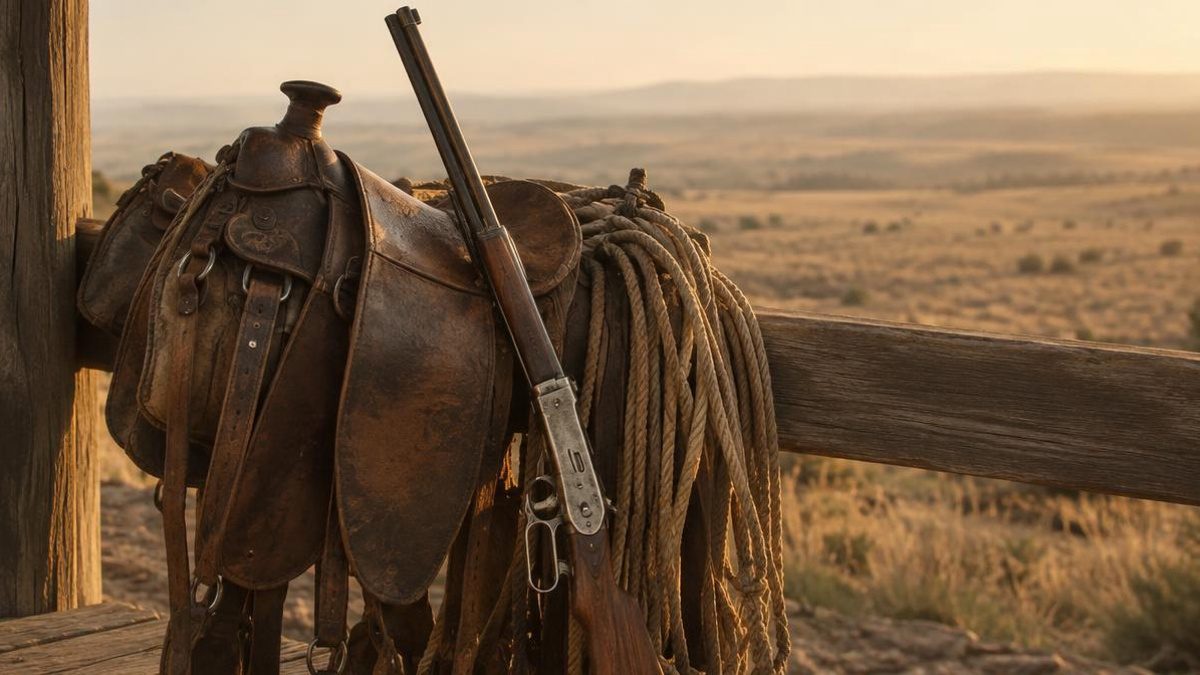
Few firearms are so tightly woven into the fabric of American expansion. The "Gun that Won the West" earned its reputation one cartridge at a time.
Few firearms are so tightly woven into the fabric of American expansion. The "Gun that Won the West" earned its reputation one cartridge at a time.
A Rifle Built for a Changing Nation
When the Winchester Repeating Arms Company introduced the Model 1873, the American West was still being written into the maps. The rifle arrived at a moment when repeating arms were moving from novelty to necessity, and its design reflected a company that understood exactly what its customers carried into the field.
The Model 1873 was not the first lever-action rifle, but it was the first to be chambered for a center-fire cartridge that could be produced reliably and affordably. That single decision — the shift from rimfire to central priming — transformed the rifle from an interesting experiment into a tool people trusted with their lives.
The Mechanics Behind the Legend
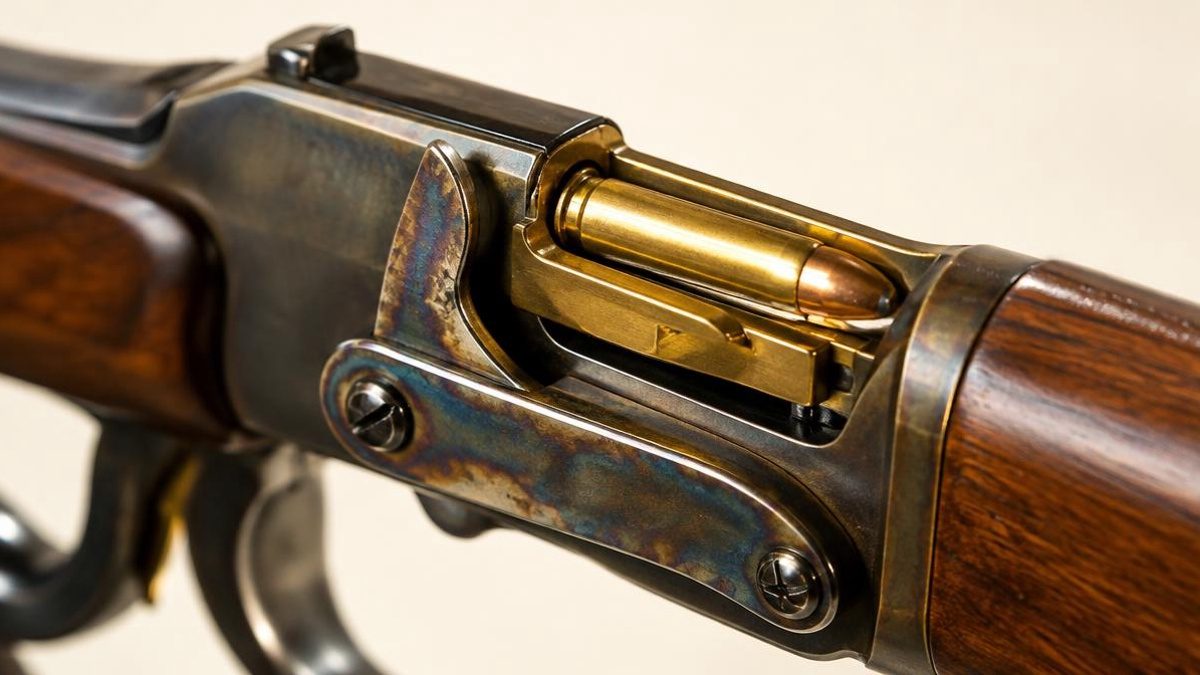
At its heart the Model 1873 is a remarkably elegant piece of engineering. The toggle-link action, inherited from the earlier Henry and Model 1866 designs, locks the breech with two pivoting links that fold into a straight line when the action closes. It is a design that rewards careful manufacture and punishes carelessness.
- Toggle-link action with a brass or iron frame, depending on production period
- Chambered in .44-40 WCF, .38-40 WCF, and later .32-20 WCF
- Octagonal and round barrels offered in a range of lengths
- Optional factory features including set triggers and special-order sights
Why Collectors Still Chase It
The Model 1873 is one of the most collected American rifles for a simple reason: the records survive. Lettering from the factory archives can often confirm configuration, barrel length, and special-order features, giving collectors a documentary backbone that many other arms lack.
Condition is everything. Original bluing on a first-model rifle, intact brass with an honest patina, and a stock that has not been sanded or refinished all carry enormous weight. A rifle that has been "restored" is generally worth a fraction of an untouched example — a lesson every beginning collector learns the hard way.
Reading an Example
Begin with the barrel address. The style and placement of the roll marking will help narrow the production window, and the presence of a caliber marking should match the frame configuration. Examine the tang for a serial number and compare it against published production records.
Then look at wear. Honest wear follows patterns — the lever, the wrist of the stock, the loading gate. Wear that appears in places a shooter would never touch is a sign worth investigating carefully before any purchase.
A Collector’s Working Method
The most useful way to study winchester model 1873: the rifle that defined an era is to move from the general to the specific. Begin with the whole object and its obvious story, then record the details that are easy to miss when a piece is viewed only as a silhouette. Note the materials, the finish, the marks and the way the parts meet. A few quiet minutes with a notebook will often reveal more than a quick search for a matching photograph. Collecting rewards patience because the evidence is usually present, but it rarely presents itself in a single dramatic clue.
Questions Worth Asking
Before adding an example of winchester model 1873: the rifle that defined an era to a collection, ask what is known, what is assumed and what still needs to be checked. Where did the piece spend most of its life? Which parts are original? Has a repair improved safety while changing historical character? Questions like these do not diminish the pleasure of ownership. They make the pleasure durable. A careful explanation from a seller is helpful, but independent photographs, period references and a second opinion are better protection than confidence alone.
The Human Scale of History
Technical history becomes memorable when it is connected to the people who used, made and cared for the object. A production change may reflect a factory decision, a military requirement or a shooter’s ordinary complaint. Wear can tell us how a firearm was carried, while a replacement part can suggest a long working life rather than neglect. Looking for those human traces keeps the subject grounded. It also helps a new collector understand why two mechanically similar examples can carry very different stories.
Notes That Become a Record
A collection becomes more valuable as a body of knowledge when its records are kept close to the objects. Photograph every marking before cleaning, record measurements in a consistent format and save the source of each identification. If a detail is uncertain, write that uncertainty down instead of filling the gap with a guess. Over time, these notes create a practical archive. They make insurance, conservation and future research easier, and they give the next owner a clear account of what was learned and what remains open.
What to Carry Forward
The lasting lesson of winchester model 1873: the rifle that defined an era is not a single date or specification. It is a way of looking: respect the original evidence, separate fact from folklore and make decisions slowly enough to be reversed when new information appears. That approach is useful whether the collection is one inherited revolver or a room of documented arms. Good stewardship is modest in appearance, but it is how ordinary objects survive with their meaning intact.
Compare Before You Conclude
One example can mislead, especially when a design changed during a long production run. Compare several documented pieces and look for the details that remain stable as well as the ones that move. A difference in screw shape, sight profile or finish may be a date clue, a factory option or evidence of later work. Comparison keeps enthusiasm honest. It also turns a surprising detail into a reason to research rather than a reason to make a quick claim.
The Value of a Second Set of Eyes
Collectors often develop a favorite way of seeing an object, and that familiarity can create blind spots. Invite another careful person to look at winchester model 1873: the rifle that defined an era without first telling them what you hope it is. Ask what they notice, what they would photograph and which question they would answer before buying. A second opinion is not a vote; it is a way to surface assumptions. The best conversations leave both people with better questions and a clearer plan.
Care Without Erasing the Past
Preservation is a balance between safety and evidence. Remove loose dirt when appropriate, but avoid treatments that make an old surface look new. Keep original screws, tags and paperwork together, even when a repair requires a temporary replacement. Record every intervention with a date and a photograph. Future researchers will be grateful for that honesty, and the object will remain legible as a historical record rather than becoming an anonymous reproduction of an earlier appearance.
A Note for New Collectors
A first purchase does not need to be rare to be meaningful. Choose a piece that gives you something clear to study, from a readable maker’s mark to a well-documented production change. Set a modest budget, leave room for research and resist the pressure to complete a category quickly. A small collection built around questions is stronger than a large one built around impulse. Curiosity is the most reliable tool a collector owns.
Keep the Story Accessible
The strongest collections can be understood by someone who did not build them. Use plain descriptions, identify sources and separate confirmed facts from family tradition. When an object is displayed or shared, explain why its design mattered and what its limitations were. That context respects the past without romanticizing it. It also invites the next generation to take part in the work of preservation, which is how a private interest becomes useful public history.