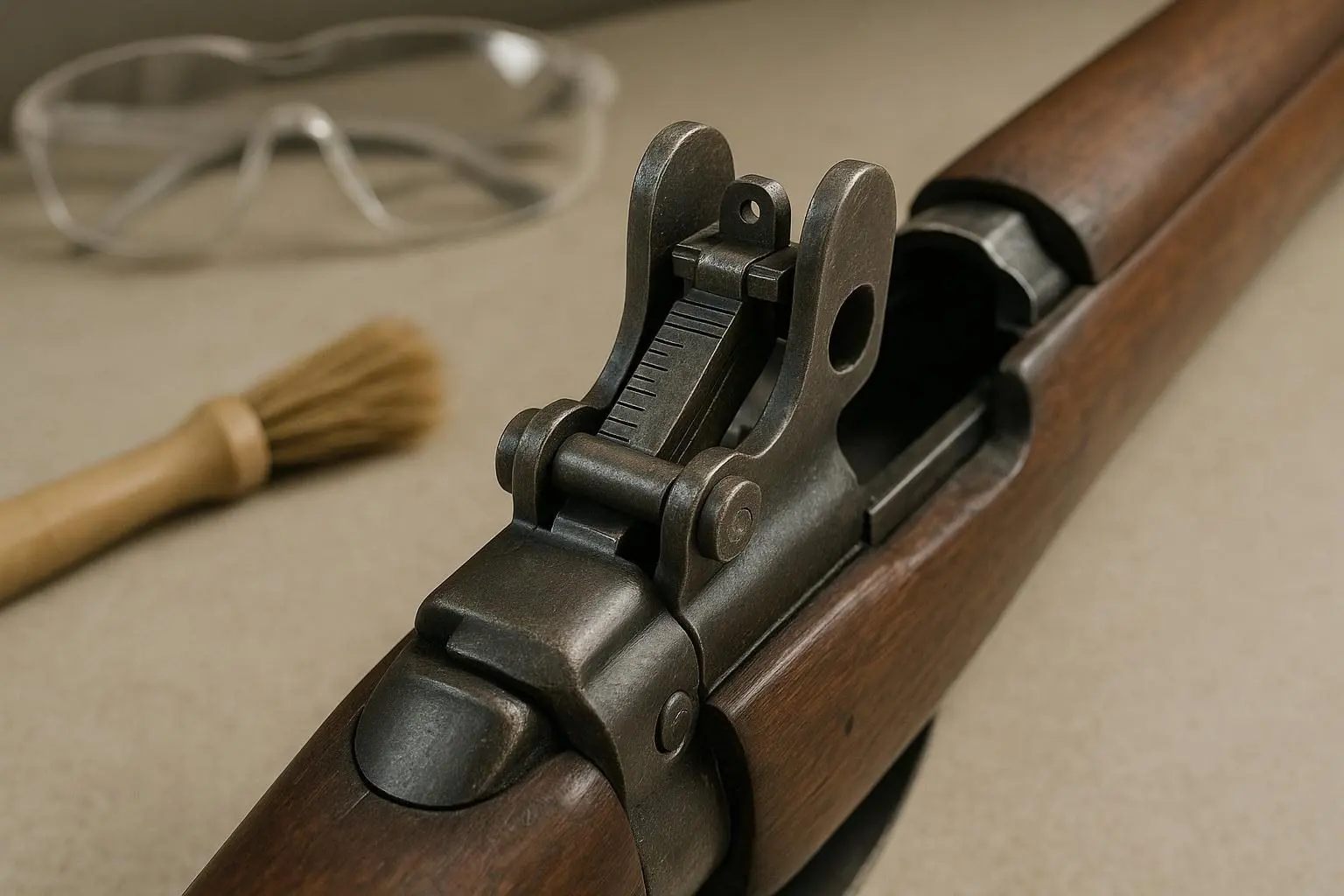
Understanding the Enfield No. 4S Aperture Sight: A Collectors Insight
The sight on a rifle often does more than just help aim. The rear sight can reveal a lot, about the rifles history, how it was used and how it was treated over time. This is especially true for the Lee-Enfield No. 4 Rifle. The aperture sight of the Enfield No. 4 Shows how military needs changed how production increased during wartime and how a rifle can turn from a combat tool into an item. When I examine or handle the Enfield No. 4 The first thing I check is the elevation slider. Does the elevation slider move smoothly? If it is stuck or broken that could mean the aperture sight of the Enfield No. 4 Has not been cared for properly. It might also point to problems that affect the reliability of the Enfield No. 4.
The Evolution of the Rear Sight Design
The Short, Magazine Lee-Enfield had a sight placed forward. That worked well in some ways. The sight was. Harder to reach during combat. The Enfield No. 4 Solved this by moving the sight to the receiver and adding a protected aperture. This was not a change made for looks. The improvement was designed to make aiming easier and faster and to keep the sight safe from damage.
By placing the sight to the shooters eye and surrounding it with ears the design improved both accuracy and durability. At the time the Enfield No. 4 Kept its Lee-Enfield feel and handling. This shows how a classic design can grow and adapt without losing its roots.
Collecting Insights: Relationship Between Sight and Receiver
When I look at the sight on the Enfield No. 4 I pay attention to how it connects to the receiver. Does the aperture sight look like a part of the Enfield No. 4? Are the ears in place? Does the finish match the rest of the Enfield No. 4? If the base of the sight looks loose misaligned or has mismatched finishes that could mean the aperture sight has been replaced or repaired.
Not every change means the Enfield No. 4 Is less valuable. Military rifles were often repaired during service. Parts were swapped out. Sometimes those replacements carry history. A replacement part might even be more valuable than the original if it comes from a factory or a particular time period. The key is to ask three questions: Is the part working safely on the Enfield No. 4? Does it fit properly on the Enfield No. 4? Can you prove that the part belongs to the Enfield No. 4? Sometimes a replacement part can be better than the original and each piece adds to the story of the Enfield No. 4.
The Condition of the Elevation Slider
The Enfield No. 4 Uses a sliding elevation mechanism that can gather dirt or wear over time. Before I start looking at it I make sure the Enfield No. 4 Is unloaded. I keep the rifle pointed in a direction and make sure no ammunition is nearby. I check the magazine and chamber to confirm that the Enfield No. 4 Is empty and safe to inspect.
I look at the elevation slider for signs of dirt, rust or bent edges. I do not apply oil or lubricant without knowing the situation. Sometimes what looks like an issue is simply a slider. If the elevation slider is stiff or does not move smoothly that could mean damage or wear. In cases a skilled gunsmith should be consulted. Trying to force the mechanism can cause harm to the Enfield No. 4.
For cleaning I use a brush and a quality firearm cleaner. That may be enough for the sight of the Enfield No. 4. If the aperture sight feels loose or the elevation slider moves with resistance I do not push it. I get help to avoid compromising the function or safety of the sight.
Manufacturing Changes During the War
The Enfield No. 4 Was produced during a time of demand. Factories across the UK and its allies had to turn out rifles. This meant that different workshops made parts with variations. Some aperture sights might have markings, finishes or even slight differences in design. This variety is normal. Reflects the urgency of production.
As a collector I should not assume that every Enfield No. 4 Is original from head to toe. Parts may have been replaced, repaired or refinished. Markings on the Enfield No. 4 Can help tell the story. I do not rely on a stamp. I look closely at the picture of the Enfield No. 4. I document the markings before cleaning. Cleaning harshly can erase evidence. Once that evidence is gone it is gone forever. These details matter for understanding the history of the Enfield No. 4.
Traces of Field Use
The aperture sight of the Enfield No. 4 Would have seen use in the field. I look at the edges of the slider and the receiver, for signs of wear. Scratches and abrasions may show how the Enfield No. 4 Was handled. Dark residues might indicate storage or maintenance. Irregular finishes could mean a repair job or refinish. These are not always signs of neglect. They can show that the Enfield No. 4 Was cared for used and maintained.
When you examine wear ask whether the sight has been affected by how it fits or functions. Check if the sight moves. Check if the sight is aligned with the barrel. Any looseness or distortion could mean the sight is no longer reliable. Never test the rifle's function until you are certain the rifle is safe. A full inspection should be done first.
Navigating the Collectors Perspective
The Enfield No. 4'S aperture sight offers a lot to learn about collecting. It brings together design intent, production challenges and real‑world use, in one part. The sight's value does not come from being untouched or perfectly original. The sight's value comes from the stories it tells and the questions it raises.
When you evaluate the sight make a plan. If the sight is clean, tight and works well document the sight. Keep the sight in that condition. If the sight is dirty but functional seek advice before cleaning the sight. If the sight is loose damaged or has repairs do not handle it much. Get help instead.
Also remember that laws around firearms vary by location and can change. Before you make any repairs move the rifle. Before making any changes, to the sight check regulations. This protects not the rifle's history but the rules that govern its ownership. The story of the rifle is important. Protecting the rifle in the way is also important.
